


Title: Tokyo-Ga
Year: 1985 (shot in 1983)
Author: Wim Wenders
Tell the same story of same people and city, Tokyo.
His films depicts the transformation of life in Japan, slow deterioration of family in Japan, and thereby the deterioration of a national identity.
Lamenting with a unindulged feeling of nostalgia on what is lost in the same time,
But these films and topics are universal in the same time
Footage from 1983, not seen as a pilgrimage but track down, research of this time depicted in Ozu’s films, what is left, what disappeared since Ozu’s death. Images, people, the changes in Tokyo.
Tokyo was like someone else’s dream, or sleepwalker.
Picnic under the cherry trees in a cemetery, rebellious child.
Seems intimate to Wenders because of Ozu’s films, trying to retrieve the intimacy in Tokyo that he had with the movies, searching for sthg that no longer exists
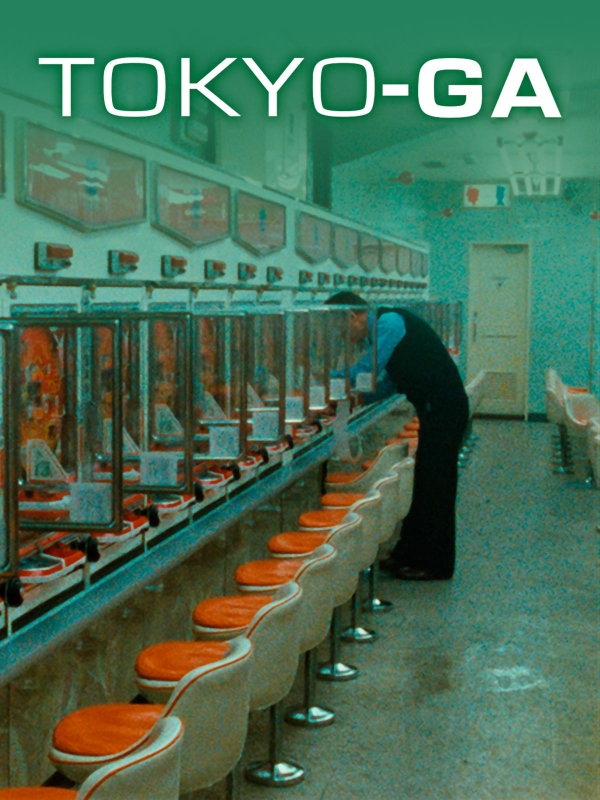
Pachinko used to pass time and to forget about oneself, not about winning, deafening sound, alone among others, solitude surrounded by a crowd. You merge with the machine, you lose touch with yourself for a while, it is an hypnosis that provides a strange feeling of happiness,
Taxi.
The reality of Tokyo strikes as a torrent impersonal, unkind threatening inhumane images
The greater and powerful became in my mind the images of the loving and mythical Tokyo I have seen in Ozu’s films
Perhaps that was what no longer existed, a view which still could achieve order in a world out of order, a view which could still render the world transparent, perhaps such a view is no longer possible today, not even for Ozu when he was alive.
Perhaps the frantically grown inflation of images has already destroyed too much, perhaps images as one with the world already disappeared.
Ozu’s grave bears no name, just 無 Nothingness.
Nothing cannot exist ? were his thoughts as a child.
Reality : hardly any other notion is more empty and useless when applied to cinema : Perception of reality is personal :
Each person sees his reality with his own eyes.
One sees the others above all the people one loves.
One sees the object surrounding himself, sees the cities and countrysides in which one lives. One also sees death, man’s mortality and the transitoriness of objects.
One sees and experience love, loneliness, happiness, sadness, fear. In short, each person sees for himself: life.
There is a gap between the experience and the depiction of that experience up there on the screen, but when something real happens on the screen, we gasp and react, even for small details.
Ozu’s films where more than just details but long lasting moments of truth, depiction of life itself, where people and environments reveals themselves. Such a depiction of reality is now gone forever.
Analogy with pachinko : what made you win yesterday will make you a loser tomorrow
One shot witha focal, another in 50mm to shot pictures in a snack street, alley. 50mm was used by Ozu
Golf : new activity, depicted with irony by Ozu, but Wenders is amazed by the precision and beauty of the gestures. The idea of putting a ball in a hole seems to be abandoned.
Huge building with a demi-circle shape and three stories opened over a wide court, people in the building practising golf. A man rehearsing gesture without accessories on the back of a building.
Sample food. show of food samples, then factory : creation of moulds based on real food, than these moulds are fille with wax, than this wax is reworked once cold, painted and cut is needed.
Testimony of his friend Werner, in search of pure and transparent images.
It’s simply true: there are not many images left.
When I look out here, I see nothing but buildings. Here, images have become almost impossible.
It’s as though you have to dig with a spade like an archaeologist.
And you have to… You have to try, in this violated landscape, to still find something…
Often this requires taking certain risks, which I would never shy away from.
And I see that there are so few people left nowadays who would be ready to take risks to relieve our misery of not having enough appropriate images.
We absolutely need images that correspond to our level of civilisation and to our inner, deepest nature.
This can oblige us to go right into a war zone or wherever necessary.
And I would never complain about the fact that sometimes it is difficult, that sometimes you have to climb 8,000 metres to reach the top of a mountain in order to get images that are pure, clear and transparent.
Here, this is nearly impossible.
You have to search hard.
I would immediately fly to Mars or Saturn if there was a rocket that I could get aboard. For example there is NASA’s Skylab project, these space shuttles that take biologists or engineers, for example, to test new technical procedures in space.
I would like to join them one day with a camera, because it is not easy anymore to find something on this planet that constitutes the transparency of images that once existed.
I would go anywhere for that.
While Wenders understand his quests, he can’t help but being fascinated with the chaos of Tokyo
Tried to go to Disneyland, but due to rain and the probability to get the same exp than in Cal, turned back.
Yoyogi Rockabilly dancers, having fun, helping each other, in the rain
Arcade game center
Met Chris Marker, known for La Jetée, in a bar. Just after this documentary, Wenders saw SANS SOLEIL with images of Tokyo, inaccessible places.
Trains. They are in every Ozu’s films.
Atsuta, second assistant, first assistant and then cameraman (15years) for Ozu. Demonstration of method of filming in the last films, different tripods, one being really low. Once set, no one could touche the camera for a scene. Avoidance of exterior shots. Stopwatch especially made by Ozu measure time and frames. Original screenplay annotated. Shots were always in a studio, never in location, except for trains.
Looking for locations, never used a car, always walked
Personal notes
Aside from the aged look of the images, many of the shots are timeless and could have been taken yesterday.
What gives the era away:
- Only the adverts,
- Outfits and hairstyles
- The construction blueprints
- The pachinko designs
- A clearer skyline than now, fewer skyscrapers
- The furniture, electronics, CRT screens
- A lot of litter
- Life much more at ground level?
Same feeling : someone else dream
Perception of reality is biased / Movies are biased too
He holds Ozu up as a paragon of the depiction of reality, goes there and cannot find this reality (or finds it no longer), but did it ever even exist?
Ozu’s aim is to show a slow degeneration; there is a message, it is not reality itself but his perception of reality that is being conveyed.
Late Showa images feels like Heisei era already.
A paradox to be noted: Wenders considers Ozu’s films as a depiction of truth, reality, while it was never shot on location. Everything was faked in a studio, except for the train shots.